
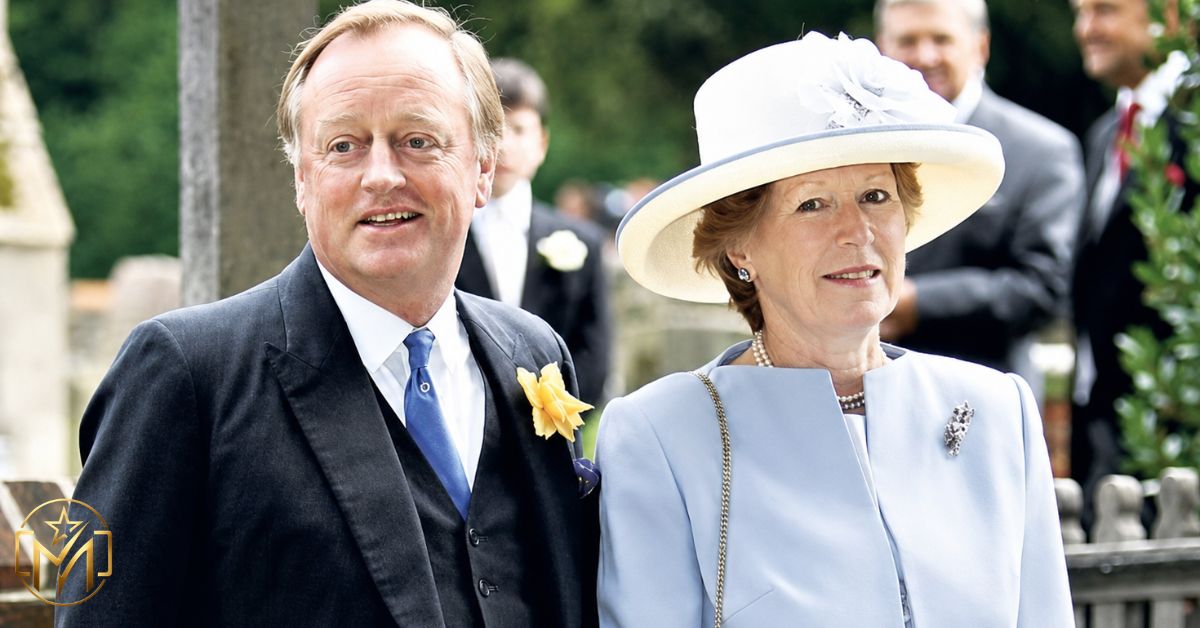
The Untold Story of Love, Loyalty, and Life Beyond the British Royal Spotlight
Behind almost every headline about the British royal family, there is a quieter story waiting to be told, and Rosemary Pitman’s life is one of them. As the second wife of Andrew Parker Bowles, Rosemary Pitman lived a life defined not by fame but by grace, family, and a genuine love of the English countryside.
While her name is often searched alongside Queen Camilla and the royal circle, her own story deserves to be told on its own terms. This article looks closely at who Rosemary Pitman really was, how she built her life, and why she is still remembered with such warmth today.
Who Was Rosemary Pitman?
Rosemary Pitman was a British woman best known as the second wife of Brigadier Andrew Parker Bowles, the former husband of Queen Camilla. Born Rosemary Alice Dickinson, she later became Rosemary Pitman through her first marriage before marrying Andrew Parker Bowles in 1996.
In this piece, you will learn about her early life, her two marriages, her passion for garden design, her connection to the royal circle, her illness, and the legacy she left behind. Her story shows that a meaningful life does not need a public stage to leave a lasting impression on the people around it.
Rosemary never chased headlines, yet her name resurfaces whenever people research Andrew Parker Bowles or the wider Parker Bowles family history. Understanding her background helps put those searches into proper context. She was, above all, a private woman whose public visibility came almost entirely through marriage rather than personal ambition.
For readers curious about the softer, human side of Britain’s royal-adjacent history, Rosemary Pitman offers a refreshing case study. Her life balanced duty, family, and personal passion in a way that still resonates with people interested in British social history today.
Quick Bio
Before diving deeper into her story, here is a quick snapshot of Rosemary Pitman’s life for easy reference.
| Category | Details |
| Full Name | Rosemary Alice Dickinson |
| Later Known As | Rosemary Pitman, Rosemary Parker Bowles |
| Date of Birth | 17 June 1940 (sometimes cited as 19 January 1940) |
| Place of Birth | Northumberland, England |
| Date of Death | 10 January 2010 |
| Age at Death | 69 |
| First Husband | Lieutenant-Colonel John Hugh Pitman |
| Second Husband | Brigadier Andrew Parker Bowles |
| Children | Henry, William, and Thomas Pitman |
| Known For | Garden design; second wife of Andrew Parker Bowles |
| Cause of Death | Complications from cancer |
This table gives a fast overview, but her life carries far more depth than dates and names alone.
Rosemary’s biography is a reminder that even people connected to famous families can lead deeply private, values-driven lives away from constant media coverage.
Early Life and Background
Rosemary Alice Dickinson was born in Northumberland, England, into a respected and comfortable family. She was the daughter of a solicitor, which placed her within a traditional, well-educated section of English society. Her upbringing reflected the values common to her generation: discipline, good manners, and a strong sense of family responsibility.
She was educated at St Mary’s School in Ascot, a well-known institution that shaped many young women from similar backgrounds. Her schooling gave her the grounding that would later define her character: composed, thoughtful, and unfailingly polite, even under public scrutiny.
Long before her name became associated with Andrew Parker Bowles, Rosemary had already built an identity of her own through education, family life, and her early interest in horses and country pursuits. These interests would remain central to her personality throughout her life.
Her formative years in Northumberland and later in the south of England gave her a lasting appreciation for rural life, something that clearly influenced her later career as a garden designer and her preference for a quieter, countryside-based lifestyle over city life or public attention.
Marriage to Andrew Parker Bowles
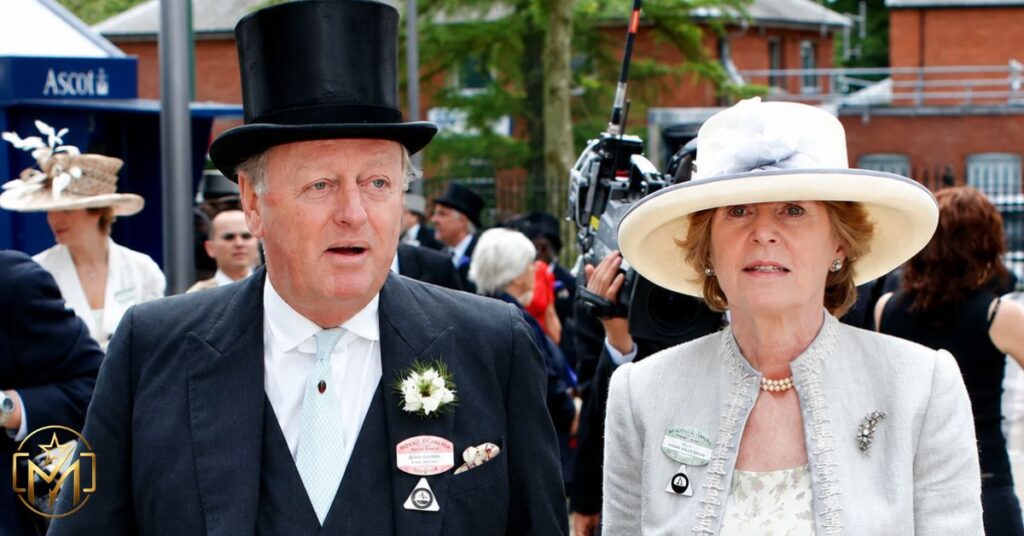
A Relationship Born from Friendship
Rosemary’s connection to Andrew Parker Bowles did not begin as a whirlwind romance; it grew out of years of familiarity. Andrew had served in the same regiment as Rosemary’s first husband, Hugh Pitman, meaning the two families moved in overlapping social and military circles for years before their own relationship developed.
After Andrew’s marriage to Camilla Shand ended in divorce in 1995, his long-standing friendship with Rosemary evolved into something deeper. Their eventual marriage in 1996 was less a sudden event and more a natural continuation of a bond built over many shared years.
The couple married at Chelsea Register Office in a low-key ceremony, later having their union blessed by the Catholic Church, since both were practicing Catholics. This choice reflected their shared values and desire for a meaningful, faith-centered commitment rather than a media spectacle.
Their wedding stood in quiet contrast to the public attention that had surrounded Andrew’s earlier marriage, setting the tone for the private life they would build together in Wiltshire.
A Private yet Strong Bond
Andrew and Rosemary shared genuine common interests, including hunting, gardening, and a love of horses, which gave their marriage a strong practical foundation beyond mere companionship. These shared passions kept their relationship grounded in everyday life rather than social status.
Remarkably, both Andrew and Rosemary maintained cordial relationships with their former spouses. Rosemary and Camilla reportedly shared mutual respect, and the two couples were even seen together at family events, including the wedding of Prince Charles and Camilla in 2005.
This maturity and lack of public conflict said a great deal about Rosemary’s character. Rather than competing for attention or status, she focused on creating a stable, affectionate home with Andrew in the Wiltshire countryside.
Their fourteen-year marriage, lasting until Rosemary’s death in 2010, was consistently described by those close to them as warm, affectionate, and rooted in genuine friendship rather than social obligation.
Life Away from the Royal Spotlight
Grace in Privacy
Despite marrying into a family with strong royal connections, Rosemary Pitman never sought the spotlight for herself. She settled into life in Wiltshire, immersing herself in village activities and community life rather than high-society events.
She became a qualified and professional garden designer, a career that reflected both her skill and her personal passion. According to her son Henry, gardening was a lifelong love that she pursued with genuine dedication, not simply as a hobby for appearances.
Rosemary’s choice to prioritize a quiet, meaningful life over public visibility set her apart from many people connected to prominent families. She proved that dignity does not require constant public presence.
Her approach to privacy was not about avoidance or secrecy; it was a deliberate, confident decision to live life on her own terms, valuing substance over spectacle.
Connection to the Royal Family
Through her marriage to Andrew, Rosemary became indirectly linked to Britain’s royal social circle, since Andrew had previously been married to Camilla, who later became Queen Camilla. This connection brought a degree of public curiosity, even though Rosemary herself held no royal title or official role.
The two couples’ continued closeness was notable. Andrew and Rosemary attended significant family events together with Camilla and Charles, including the 2005 royal wedding, demonstrating a rare example of blended-family harmony among prominent British social figures.
Camilla is also reported to have supported Andrew during Rosemary’s illness and after her passing, further illustrating the respectful relationship that existed between the two women and their families over the years.
This layer of Rosemary’s story highlights an important nuance: proximity to royal circles does not automatically mean public prominence, and Rosemary’s case is a clear example of someone who remained personally private despite these connections.
Illness and Passing
In the mid-2000s, Rosemary Pitman was diagnosed with cancer, beginning what would become a multi-year battle with the illness. Reports at the time described her as facing treatment, including chemotherapy and radiotherapy, with remarkable courage and resilience.
Those close to the family noted her determination to celebrate important milestones despite her declining health, including Christmas, Andrew’s 70th birthday, and the births of her grandchildren, all of which she was able to witness before her passing.
Rosemary Pitman died on 10 January 2010 at her home near Malmesbury, Wiltshire, at the age of 69, following a battle with cancer that had lasted several years. Her passing marked the end of a fourteen-year marriage built on genuine partnership.
Her funeral service was held at St Aldhelm’s Catholic Church in Malmesbury, attended by around 200 mourners, including Princess Anne, reflecting the deep respect she had earned within her family’s extended social circle. A memorial service followed in March 2010 at the Guards Chapel in London.
Read More : Jon Aitchison: The Influential Father Behind Charli XCX’s Global Music Success
Legacy of Rosemary Pitman
Remembered for Her Grace
Rosemary Pitman’s legacy is not built on fame or public achievement but on the quiet strength and dignity she demonstrated throughout her life. Friends and family consistently described her as warm, courageous, and devoted to those she loved.
Her ability to maintain composure and kindness, both during her marriage and through her illness, left a lasting impression on everyone who knew her personally, from close family members to the wider Wiltshire community she was part of.
The verses chosen for her funeral, centered on the theme of gardens and nature, reflected how deeply her personality and passions were tied to the peaceful, grounded life she had built for herself away from public attention.
Even years after her passing, Rosemary is remembered as someone whose grace under pressure, particularly during her illness, offered a quiet example of resilience that continues to resonate with those who learn her story today.
Her Influence in Society
While Rosemary never held any official title, her influence was felt through the stability she brought to her marriage and the goodwill she maintained across a complicated web of family relationships, including her connection to Camilla and Andrew’s children.
Her professional work as a garden designer also left a tangible mark, contributing to the aesthetic and horticultural life of the communities she was part of, and reflecting a genuine talent that existed independently of her marriage.
Rosemary’s story also offers a broader social lesson about how people can maintain personal identity and purpose even when connected to famous or high-profile families, choosing substance and privacy over public recognition.
Her life continues to be referenced in discussions of the modern royal family’s extended history, serving as a reminder that not every meaningful figure in these stories seeks or receives constant public attention.
Interesting Facts about Rosemary Pitman
Here are some lesser-known but notable facts about Rosemary Pitman’s life:
- She was born Rosemary Alice Dickinson, the daughter of a solicitor from Northumberland.
- Her first husband, Hugh Pitman, was a descendant of Sir Isaac Pitman, the inventor of shorthand writing.
- She and Andrew Parker Bowles knew each other for years before their marriage, since Andrew served in the same regiment as her first husband.
- Rosemary and Andrew married in a low-key ceremony at Chelsea Register Office in 1996.
- Both Rosemary and Andrew were devout Catholics, and their marriage was later blessed by the Church.
- She had three sons from her first marriage: Henry, William, and Thomas Pitman.
- Rosemary did not have any biological children with Andrew Parker Bowles.
- She was a professionally trained and accomplished garden designer.
- Princess Anne, who had dated Andrew in the 1970s, attended Rosemary’s funeral in 2010.
- Rosemary and Camilla reportedly shared a respectful relationship despite the complex family history.
These details paint a fuller picture of a woman whose life extended well beyond her connection to Andrew Parker Bowles.
Conclusion: A Quiet Icon of British Elegance
Rosemary Pitman’s story is a compelling reminder that grace, loyalty, and quiet strength can leave just as lasting an impression as public fame. As the second wife of Andrew Parker Bowles, she navigated a complex social world with dignity, choosing a life centered on family, gardening, and genuine relationships rather than public recognition.
Her fourteen-year marriage, her courage during illness, and her enduring reputation for kindness all reflect a woman who valued substance over spectacle. Even today, Rosemary Pitman remains a quietly admired figure in British social history, remembered not for scandal or fame, but for the genuine warmth and elegance she brought to everyone around her.
Frequently Asked Questions (FAQ)
Who was Rosemary Pitman?
Rosemary Pitman was a British woman best known as the second wife of Brigadier Andrew Parker Bowles, the former husband of Queen Camilla.
When did Rosemary Pitman marry Andrew Parker Bowles?
Rosemary married Andrew Parker Bowles in 1996, a year after his divorce from Camilla Shand.
Did Rosemary Pitman and Andrew Parker Bowles have children together?
No, the couple did not have any children together, although both had children from their previous marriages.
How many children did Rosemary Pitman have?
Rosemary had three sons, Henry, William, and Thomas Pitman, from her first marriage to Hugh Pitman.
Who was Rosemary Pitman’s first husband?
Her first husband was Lieutenant-Colonel John Hugh Pitman, whom she later divorced before marrying Andrew Parker Bowles.
What did Rosemary Pitman do for a living?
Rosemary was a qualified and professional garden designer with a genuine passion for horticulture and country life.
How did Rosemary Pitman die?
Rosemary died on 10 January 2010 after a multi-year battle with cancer, at the age of 69.
Was Rosemary Pitman connected to the royal family?
She was connected indirectly through her marriage to Andrew Parker Bowles, who was previously married to Queen Camilla.
Did Princess Anne attend Rosemary Pitman’s funeral?
Yes, Princess Anne was among roughly 200 mourners at Rosemary’s funeral service in Malmesbury in January 2010.
Where did Rosemary Pitman live during her marriage to Andrew Parker Bowles?
She lived in Wiltshire, near Malmesbury, where she was active in village life and her garden design work.

William is a dedicated content writer and celebrity blog specialist with 5 years of experience in producing engaging, accurate, and SEO-friendly content. He excels at researching celebrity biographies, entertainment news, and public figures, transforming complex information into easy-to-read articles. His commitment to quality, originality, and reader-focused storytelling helps deliver trusted and informative content to audiences worldwide.