

Grace Andrews appeared on The Only Way Is Essex (TOWIE) during Series 11 in 2014, when the show was at the height of its popularity. Although she briefly entered the spotlight, she chose to step away without controversy or media attention.
This article explores Grace Andrews’ time on TOWIE, why she left reality TV, and how her decision to embrace a private life reflects a different perspective on fame and personal identity.
Grace Andrews and Her Arrival on The Only Way Is Essex
Grace Andrews made her debut on The Only Way Is Essex during series 11, which aired from February to April 2014. This was a significant moment in the show’s timeline. TOWIE had already won a BAFTA Audience Award by 2011 and had firmly established itself as a defining piece of British popular culture. By series 11, the cast was well-known, the format was refined, and the audience was massive.
Joining the cast at this stage meant stepping into an already well-defined social world. TOWIE was not simply a television programme — it was a cultural ecosystem with its own fashion sensibility, social codes, and interpersonal dynamics.
New cast members had to find their footing quickly, and Grace Andrews did exactly that. She integrated into the show’s social landscape with composure and confidence.
She entered the storyline as a romantic interest for Mario Falcone, one of TOWIE’s more prominent male cast members at the time. This gave her an immediate narrative role and placed her at the centre of the kind of relationship-focused storytelling that TOWIE’s audience loved. Rather than being introduced as a peripheral character, she was woven into the fabric of the show from the outset.
Her on-screen presence was polished and self-assured. While other cast members leaned into explosive drama or exaggerated emotional confrontations, Grace brought a more measured quality to her scenes. She was glamorous in the distinctly Essex way the show celebrated, but also composed in a way that set her apart from many of her peers.
| Key Facts About Grace Andrews on TOWIE | Details |
| Series Debut | Series 11 (2014) |
| Network | ITV2 (later ITVBe) |
| Notable Storyline | Romantic interest for Mario Falcone |
| Final Series | Series 12 (2014) |
| Post-Show Career | Chose private life |
Life Inside the TOWIE Spotlight
Being a cast member on TOWIE during 2014 meant living a highly public life, whether you wanted to or not. The show’s format — real people in structured situations with unscripted dialogue — meant that personal moments, social tensions, and relationship dynamics played out in front of millions of viewers each week. Grace Andrews navigated this environment with notable poise.
She appeared at the group events, parties, and social gatherings that formed the core of TOWIE’s storytelling. These scenes were not just entertainment filler — they were the connective tissue of the show, where alliances formed, conflicts escalated, and personalities were defined. Featuring prominently in these moments meant Grace was seen as a genuine part of the cast, not an outsider looking in.
The public attention extended well beyond the television screen. TOWIE cast members during this era were followed by tabloid journalists, photographed at events, discussed on social media, and referenced in celebrity gossip columns.
Their fashion choices became talking points. Their relationships were dissected online. Their every public move was tracked and catalogued by an eager fan base and a hungry media industry.
Grace Andrews existed within this intense ecosystem for the duration of her time on the show. She managed it without generating the kind of controversies that sometimes derailed other cast members’ reputations.
Her time on screen was characterised by the social confidence she projected — someone comfortable in high-pressure social situations and capable of holding her own within a competitive cast dynamic.
She also built a meaningful following on social media during this period, with Twitter in particular becoming a space where fans could connect with her directly. This following reflected the genuine audience interest she had cultivated through her television appearances.
It was a foundation that many former TOWIE stars would have used as a springboard — but Grace Andrews ultimately chose not to build upon it in the expected direction.
Why Grace Andrews Stepped Away from Reality Television
The question that fans and observers most frequently ask about Grace Andrews is a simple one: why did she leave? The answer, while never stated publicly in explicit terms, can be pieced together through context and the pattern of her choices following her departure.
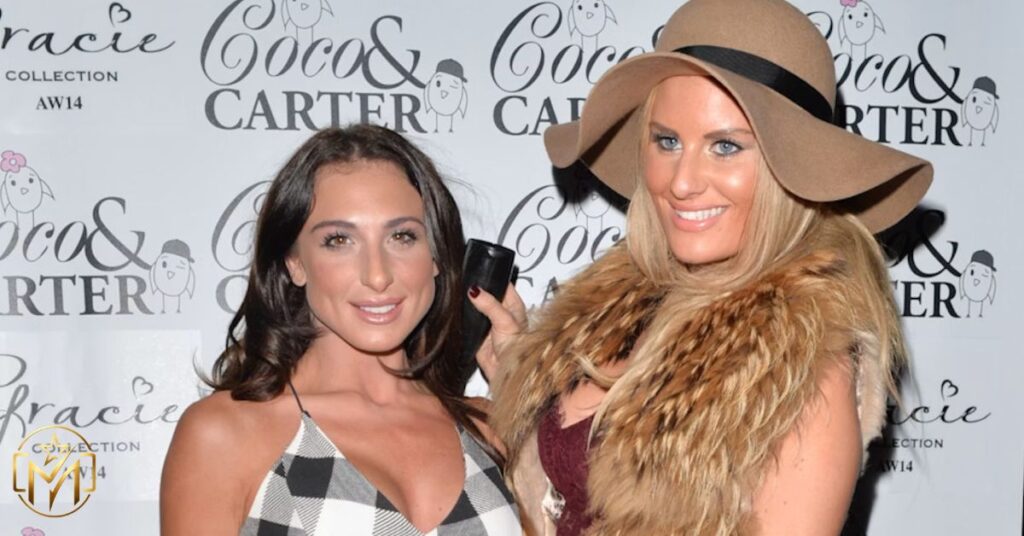
Reality television fame in the mid-2010s came with significant personal costs. The public scrutiny was relentless, the media cycle was unforgiving, and the pressure to maintain a marketable persona was constant.
Cast members who remained in the public eye often found their personal lives becoming subject to commentary, criticism, and intrusion that could be genuinely difficult to manage.
For some, those costs are worth bearing in exchange for the opportunities fame brings. For Grace Andrews, the calculation appears to have been different. She demonstrated through her choices that she valued her private life more than the career possibilities her public profile might have unlocked.
There is also something worth noting about the nature of her time on the show. Grace appeared for two series — series 11 and series 12 — and her departure at the end of series 12 did not coincide with any reported conflict or dismissal. She was not axed in the way some cast members were. She simply did not return, and no statement of departure was ever widely publicised.
This quiet exit is itself telling. It suggests a considered decision rather than a reactive one — a deliberate choice to close a chapter rather than an abrupt ending forced by external circumstances. In stepping away on her own terms, Grace Andrews exercised a form of agency that relatively few reality television participants ever get to use.
The decision reflects a broader understanding that public exposure is not inherently valuable and that the currency of fame has diminishing personal returns if what you ultimately want is a life lived on your own terms.
Grace Andrews and the Changing Reality TV Landscape
When Grace Andrews appeared on TOWIE in 2014, the reality television landscape was in a state of significant transition. Social media platforms were growing rapidly in influence, and the relationship between on-screen fame and digital following was becoming more commercially important than ever before.
Instagram, in particular, was beginning to reshape how reality stars monetised their profiles, and the influencer economy was emerging as a genuine career path.
Many TOWIE cast members from this era rode that wave successfully. They built large followings, signed brand deals, launched their own product lines, and evolved from television personalities into fully-fledged digital entrepreneurs. The path from reality TV cast member to influencer was becoming well-trodden, and it offered the promise of ongoing income and relevance.
Grace Andrews’ absence from this transition is one of the most interesting aspects of her story. By stepping back from the public eye during the period when the influencer economy was taking shape, she opted out of a commercial opportunity that many others were seizing enthusiastically.
Whether this was a conscious rejection of that lifestyle or simply a reflection of her personal priorities is not entirely clear, but the effect is the same.
Today, the reality television landscape has continued to evolve. Shows like Love Island have created new templates for mass fame, and the cycle of public exposure, influencer growth, and eventual fade is now well understood. In this context, Grace Andrews’ trajectory looks increasingly distinctive. She did not follow the expected arc. She wrote a different ending to her story, and that difference is what keeps people curious about her.
| Reality TV Era Comparison | Mid-2010s TOWIE Cast | Grace Andrews |
| Post-show social media growth | Common and commercially driven | Minimal public presence |
| Influencer brand deals | Widely pursued | Not publicly pursued |
| Media appearances | Regular | Rare to none |
| Public narrative | Ongoing and evolving | Closed and contained |
Public Memory and Fan Perception
Years after her final appearance on TOWIE, Grace Andrews continues to generate curiosity among fans of the show. This is a notable phenomenon. Many cast members from the same era have faded from public discussion entirely, yet Grace remains a recurring subject in fan forums, social media discussions, and retrospective articles about the show’s history.
The reason for this sustained interest is not hard to identify. Her limited public presence means that there is very little new information about her circulating in the media. This scarcity of information creates a kind of mystery that naturally invites speculation and interest.
Fans who remember her from her time on the show find themselves wondering what happened next, and that unanswered question keeps her name alive in conversation.
Fan perception of Grace Andrews is broadly positive. She is remembered as a composed and glamorous presence on the show, someone who brought a certain poise to the cast without resorting to the dramatic behaviour that often generated headlines. This positive baseline memory, preserved without being complicated by post-show controversies or missteps, works in her favour. Read More
The fans who discuss Grace Andrews most enthusiastically tend to be long-time TOWIE viewers with an emotional connection to the show’s mid-2010s era. For them, she represents a specific moment in the programme’s history — a time when the cast had a particular chemistry and the show felt at the height of its powers.
Nostalgia plays a role in how she is remembered, but so does genuine admiration for the choices she made after the cameras stopped rolling.
Her story serves as a counterpoint to the more turbulent narratives of some of her former co-stars, and that contrast makes her a figure worth remembering and discussing. She is proof that it is possible to pass through the TOWIE universe without being defined or consumed by it.
Grace Andrews as a Symbol of Quiet Success
In a culture that equates success with visibility, Grace Andrews represents an alternative model. Her version of success is not measured in follower counts, media coverage, or brand partnership announcements. It is measured in the personal satisfaction of having lived on her own terms — a concept that is easy to admire but difficult to put into practice when public fame is at stake.
The idea of quiet success is particularly resonant in the context of reality television, where the incentive structures are almost entirely oriented toward maintaining and expanding public visibility.
Cast members are encouraged to stay in the news, to stir controversy if necessary, and to convert screen time into commercial opportunity at every available turn. Walking away from that structure requires a clarity of personal values that not everyone possesses.
Grace Andrews appears to have had that clarity. By prioritising privacy over prolonged fame, she demonstrated that her sense of self was not dependent on public validation. This is, arguably, a form of emotional maturity that is harder to achieve than it might look from the outside — especially when fame arrives suddenly and the world is actively encouraging you to keep the spotlight burning.
Her story is also a reminder that legacy takes many forms. A legacy built on restraint and personal integrity is no less meaningful than one built on celebrity appearances and media saturation. If anything, the former tends to age better. The people who were on TOWIE and generated constant headlines during and after their tenure are not always remembered more warmly or more enduringly than those who stepped back gracefully.
Grace Andrews chose grace — quite literally — and the quiet legacy she has built as a result is something that continues to intrigue and inspire the people who take the time to look more closely at her story.
Conclusion: The Enduring Appeal of Grace Andrews
Grace Andrews entered the world of British reality television at one of TOWIE’s most culturally significant moments and left it on her own terms. Her story is not one of dramatic exits or tabloid controversies.
It is the story of someone who understood what they wanted from a very early stage and had the courage to pursue it — even when the world around them was offering something very different. For anyone curious about the quieter corners of British reality TV history, Grace Andrews remains a compelling, thought-provoking figure whose legacy has endured not in spite of her silence, but because of it.
FAQs
Who is Grace Andrews from TOWIE?
Grace Andrews is a former British reality television personality who appeared on The Only Way Is Essex during series 11 and 12 in 2014. She was known for her composed, glamorous on-screen presence.
When did Grace Andrews appear on TOWIE?
Grace Andrews joined TOWIE in series 11, which aired from February to April 2014, and made her final appearance in series 12 later that same year.
Why did Grace Andrews leave TOWIE?
Grace Andrews never publicly explained her departure, but her choices suggest she prioritised personal privacy over continuing a career in the public eye.
What was Grace Andrews’ storyline on TOWIE?
She was introduced as a romantic interest for cast member Mario Falcone, which gave her a central narrative role from her very first appearance on the show.
Did Grace Andrews become an influencer after TOWIE?
Unlike many of her co-stars, Grace Andrews did not build a public influencer career after leaving the show and instead maintained a low public profile.
Is Grace Andrews active on social media?
Grace Andrews has significantly reduced her social media presence since her time on TOWIE and does not actively engage with mainstream celebrity or influencer culture.
What series of TOWIE did Grace Andrews appear in?
Grace Andrews appeared in series 11 and series 12 of The Only Way Is Essex, both of which aired in 2014.
Who else joined TOWIE in series 11 alongside Grace Andrews?
Series 11 also introduced Fran Parman and Georgia Kousoulou to the TOWIE cast, among others, and was the final series to feature original cast member Sam Faiers.
Why is Grace Andrews still talked about by TOWIE fans?
Her limited public presence and quiet exit from fame have made her a figure of enduring curiosity — fans remember her positively and wonder about her life after the show.
What does Grace Andrews’ story tell us about reality TV fame?
Her story illustrates that fame from reality television does not have to define a person’s entire life, and that choosing privacy is a valid and, in some ways, a remarkably brave response to sudden public exposure.

William is a dedicated content writer and celebrity blog specialist with 5 years of experience in producing engaging, accurate, and SEO-friendly content. He excels at researching celebrity biographies, entertainment news, and public figures, transforming complex information into easy-to-read articles. His commitment to quality, originality, and reader-focused storytelling helps deliver trusted and informative content to audiences worldwide.