
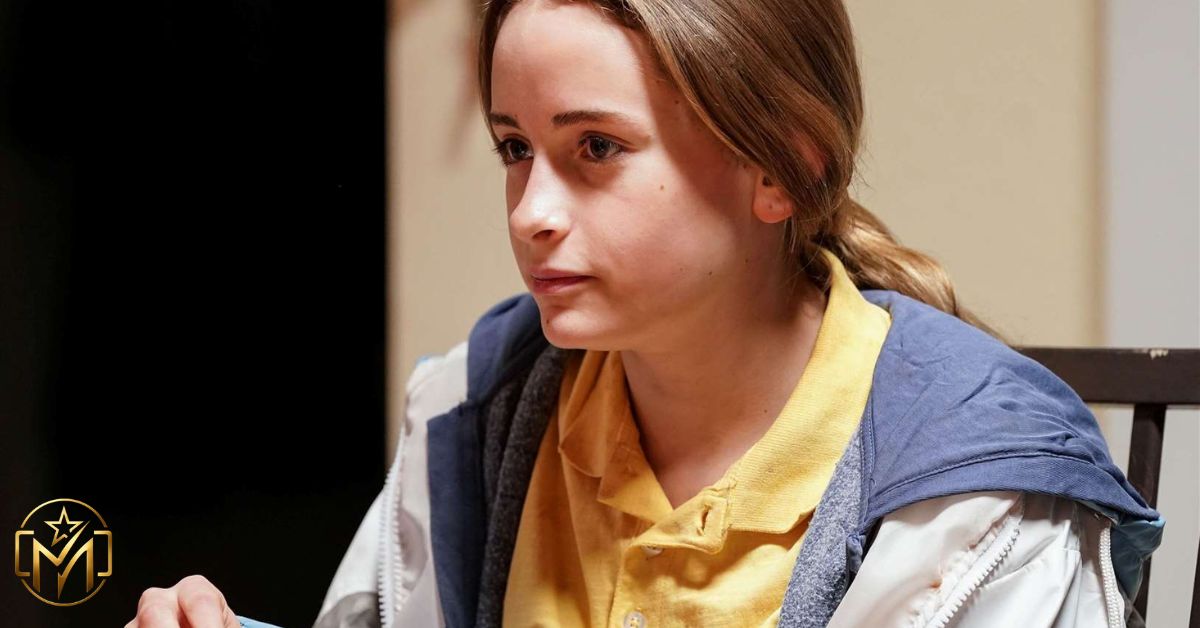
British independent cinema doesn’t produce overnight sensations very often, but Lola Campbell has become exactly that. In just a couple of years, this young performer from a small Essex village has gone from recording lockdown skits on her phone to earning nominations from two of the UK’s most respected film bodies.
What makes Lola Campbell such a compelling screen presence at such a young age? In this article, you’ll learn about her background, her breakout role, the acting qualities critics keep praising, the awards she’s collected, and what her rise means for the future of British independent film.
Early Life and Background
Lola Campbell grew up far from the entertainment industry’s usual pipelines. She lives with her family in Sheering, a quiet village near Bishop’s Stortford in Hertfordshire, and attends The Leventhorpe School in nearby Sawbridgeworth.
Nothing about her upbringing suggested a future in film; she had never performed in a school play before her screen debut, which makes her subsequent success even more striking.
During the COVID-19 lockdowns, like many children, Campbell found herself with unstructured time on her hands. Rather than simply passing the days, she began recording and producing short videos and skits, often for fun and without any professional ambition attached.
Those homemade recordings turned out to be an unintentional training ground, sharpening her comic timing and comfort in front of a camera long before anyone in the industry knew her name.
Her introduction to acting came almost by accident. A friend of her mother spotted a casting call and passed it along, describing the opportunity loosely as “a bit of a mess about.” Campbell auditioned somewhat reluctantly, and her first in-person audition in London didn’t go smoothly at all; she reportedly went quiet and barely answered questions from the casting team.
What changed everything was a self-tape recreation of a famous soap opera scene. Campbell acted out every character from a well-known confrontation, impressing the director with her instinct for voice, character, and slang. That single moment of confidence became the turning point that launched her career.
It’s worth noting how ordinary her early life remained even after casting. She continued attending school, kept the filming largely private from classmates, and treated the entire process as something closer to an adventure than a career move. That grounded, unaffected approach has stayed with her ever since.
Her family has remained closely involved throughout, supporting her without pushing her into an overly managed or stage-school environment. This organic upbringing, free of formal drama training, is frequently cited as part of what makes her performances feel so unforced and genuine.
Breakthrough Role in British Cinema
Every emerging actor needs a role that proves what they’re capable of, and for Lola Campbell, that role arrived almost immediately. Her casting in a British independent feature gave her the platform to demonstrate range, emotional depth, and comic instinct in a single performance, something many actors don’t achieve until years into their careers.

The film itself became a calling card for a wider movement in British cinema: low-budget, character-driven stories rooted in working-class life, told with warmth rather than bleakness. Campbell’s presence at the centre of that story helped the project resonate far beyond the festival circuit where it premiered.
Debut Performance in Scrapper
Campbell’s screen debut came in the 2023 British comedy-drama Scrapper, the directorial debut of filmmaker Charlotte Regan. She played Georgie, a resourceful twelve-year-old girl who secretly lives alone in an east London council house after her mother’s death, evading social services while running a small bike-resale operation with her best friend Ali.
The story shifts when Georgie’s absent father, played by Harris Dickinson, unexpectedly reappears and tries to reconnect. Campbell was twelve years old during filming, which took place over a six-week shoot in Chigwell during the summer of 2021. She has described the set as relaxed and improvisational, noting that being allowed to adjust dialogue naturally made her performance feel more authentic.
Scrapper premiered at the Sundance Film Festival, where it won the World Cinema Grand Jury Prize: Dramatic, an early signal that the film, and Campbell’s performance within it, had struck a chord with international audiences and critics alike.
Critical Reception and Industry Recognition
Reviews of Scrapper consistently singled out Campbell’s performance for special praise. The Financial Times called her an “astonishing discovery,” while The Spectator described her work as “terrific, fresh, naturalistic.” The New York Times praised how “wonderfully” she inhabited the role of Georgie, and The Guardian highlighted her impressive command of a genuinely demanding lead part.
What made this reception notable wasn’t just its warmth but its consistency. Critics across very different publications, with very different tastes, landed on the same conclusion: Lola Campbell had delivered a performance well beyond her years and experience level. For a first-time actor with no formal training, that kind of unanimous critical response is genuinely rare. Read More
Acting Style and On-Screen Presence
Part of what separates Lola Campbell from other young performers is the specific quality of her acting rather than simply the fact that she’s talented for her age. Critics and industry figures have repeatedly pointed to a natural, unforced style that avoids the stiffness often associated with child performances.
Her presence on screen doesn’t feel coached or rehearsed in the traditional sense. Instead, it reads as instinctive, almost as though the camera happened to catch a real moment rather than a scripted one. That distinction matters enormously in the kind of socially grounded, realist storytelling that Scrapper represents.
Naturalism and Emotional Authenticity
Campbell’s performance style leans heavily on naturalism, a quality that’s difficult to teach and even harder to fake. Her dialogue delivery, physicality, and reactions in Scrapper often felt improvised even when they followed the script closely, largely because director Charlotte Regan encouraged genuine, loose interaction on set rather than rigid line delivery.
This authenticity extends to how she handles emotionally heavy material. Playing a grieving child who masks vulnerability behind bravado requires tonal control that many adult actors struggle with, yet Campbell balanced Georgie’s toughness and tenderness without letting either dominate the performance. That balance is central to why critics described her work as moving rather than merely impressive.
Versatility at a Young Age
Beyond naturalism, Campbell has shown an ability to shift tone and format entirely. Moving from an indie feature film to a fast-paced television soap opera is a significant adjustment, involving different pacing, shooting schedules, and performance rhythms, yet she made that transition smoothly when she joined a long-running BBC drama.
Her range also shows in how she handles both comedic and dramatic beats within the same role. Georgie in Scrapper required humour, defiance, grief, and warmth often within a single scene, and Campbell moved between those registers convincingly. That flexibility suggests a performer capable of tackling a wide variety of roles as her career develops.
Awards and Achievements
Lola Campbell’s recognition arrived swiftly after her debut, an unusual pace for someone with only one credited film role at the time. Her achievements reflect how strongly both critics and industry voting bodies responded to her work in Scrapper.
| Award / Recognition | Body | Result |
| Breakthrough Performance | British Independent Film Awards | Nominated |
| Breakthrough Performance | London Film Critics’ Circle | Nominated |
| Young British/Irish Performer of the Year | London Film Critics’ Circle (44th Awards) | Won |
| World Cinema Grand Jury Prize: Dramatic (for Scrapper) | Sundance Film Festival | Won (film-level award) |
The Young British/Irish Performer of the Year win at the London Film Critics’ Circle Awards stands out as her most significant individual honour to date. Winning that category as a young debut actor placed her alongside far more established names in British and Irish cinema, underscoring how seriously the industry took her performance.
Her nomination for Breakthrough Performance at the British Independent Film Awards further cemented her reputation, especially given that Scrapper itself was also recognised as a BAFTA-nominated film. Together, these accolades mark an unusually strong start for any actor, let alone one making their screen debut as a young teenager.
Read More : Asalia Nazario: The Resilient Mother Behind Zoe Saldaña’s Global Success
Impact on British Independent Film
Lola Campbell’s success has implications that reach beyond her own career. Her casting story, essentially discovered through a low-key social media casting call rather than formal representation, reflects a broader trend of British indie filmmakers seeking unpolished, authentic performers instead of trained child actors.
This approach has helped keep British social-realist cinema feeling fresh and grounded. Films like Scrapper rely on performances that feel lived-in rather than performed, and casting directors increasingly look for exactly the qualities Campbell brought to her debut: regional authenticity, natural speech patterns, and an unforced emotional register.
A New Generation of Performers
Campbell belongs to a small but growing group of young British actors who have entered the industry through non-traditional routes and quickly earned critical acclaim. Her rise mirrors a broader shift where directors of low-budget British films are actively seeking newcomers over trained performers, prioritising authenticity over polish.
This shift matters for the wider industry because it opens doors for young talent from working-class or non-metropolitan backgrounds who might never have considered acting as an accessible path. Campbell’s story, an ordinary schoolgirl from a small Hertfordshire village cast through a casual social media post, offers a genuinely encouraging blueprint for aspiring performers without industry connections.
Cultural and Social Resonance
Scrapper‘s themes of grief, resilience, and working-class life resonated with audiences well beyond typical festival crowds, and Campbell’s performance was central to that connection. She has spoken about hoping the film reaches people dealing with loss, regardless of whether their circumstances mirror Georgie’s exactly.
That social resonance elevates her work beyond simple critical praise. Performances that connect emotionally with wide audiences, rather than just impressing critics, tend to have a longer cultural shelf life, and early signs suggest Campbell’s portrayal of Georgie will be remembered as one of British independent cinema’s more affecting recent performances.
Career Prospects and Future Potential
Following her acclaimed film debut, Lola Campbell moved into television, taking a guest role in the BBC crime drama The Responder before joining the long-running soap opera EastEnders as Britney Wainwright in March 2024. Her storyline tackled difficult themes including neglect and a health diagnosis, giving her further opportunity to showcase dramatic range in a completely different production environment.
This progression, from an award-winning independent film to a major returning television role, suggests a deliberate and healthy career trajectory rather than a one-off breakout. Television work of this scale demands consistency and stamina that differ significantly from a six-week film shoot, and her ability to adapt speaks well to her long-term prospects.
Industry observers will be watching closely to see whether Campbell continues splitting her time between film and television, or gravitates toward one medium as she matures. Given the strength of her Scrapper reception, further film roles, potentially in more prominent productions, would not be surprising in the coming years.
Her age and current commitment to schooling also mean her career will likely develop gradually rather than at a frantic pace, which many industry watchers view as a healthy sign rather than a limitation. Balancing education with a growing acting career is a common path for successful young performers, and Campbell’s family appears intent on protecting that balance.
Public Image and Media Presence
Despite the acclaim surrounding her, Lola Campbell has maintained a notably low-key public profile. Reports describe her as shy and private, someone who kept her role in Scrapper quiet even from many classmates at school, and who has largely avoided the kind of heavy media presence sometimes associated with young breakout stars.

This restraint appears intentional rather than accidental. Her interviews reveal a grounded, unassuming personality that contrasts with Georgie’s on-screen bravado, suggesting a clear separation between her private life and her acting work. That separation may prove valuable as her profile continues to grow.
Media coverage of Campbell has largely centred on her performance and her unconventional path into acting rather than tabloid-style attention, a dynamic that benefits both her wellbeing and the credibility of her career. As she continues taking on more visible roles, this measured, substance-first media presence is likely to remain part of her identity as a performer.
Conclusion
Lola Campbell’s rise from lockdown video skits to award-winning performances represents one of British cinema’s most compelling recent stories. Her breakout role in Scrapper showcased a rare naturalism and emotional depth, earning nominations from the British Independent Film Awards and a win at the London Film Critics’ Circle Awards.
From there, she moved confidently into television with EastEnders, proving her range extends well beyond a single acclaimed performance. As British independent film continues favouring authentic, unpolished talent over traditionally trained performers, Lola Campbell stands as a genuine example of what that shift can produce. Her career is still in its early chapters, but the foundation she’s built suggests a long and meaningful future in British screen acting.
FAQs
Who is Lola Campbell?
Lola Campbell is a British child actress from Sheering, Hertfordshire, best known for her acclaimed debut performance as Georgie in the 2023 film Scrapper.
How old was Lola Campbell in Scrapper?
She was twelve years old during filming, which took place during the summer of 2021 in Chigwell, England.
What awards has Lola Campbell won?
She won Young British/Irish Performer of the Year at the London Film Critics’ Circle Awards and was nominated for Breakthrough Performance at the British Independent Film Awards.
Did Lola Campbell have acting training before Scrapper?
No, she had never appeared in a school play or received formal acting training before being cast in her debut film role.
How was Lola Campbell discovered?
She was cast after responding to a casual Facebook casting call, later impressing the director with a self-tape recreating a famous EastEnders scene.
What role does Lola Campbell play in EastEnders?
She plays Britney Wainwright, a troubled teenager whose storyline explores neglect, vulnerability, and resilience within the soap opera.
Is Scrapper based on a true story?
No, Scrapper is a fictional comedy-drama, though it draws on emotionally grounded, socially realistic themes common in British independent film.
Who directed Scrapper?
Scrapper was written and directed by Charlotte Regan, marking her feature directorial debut.
What festival awards did Scrapper win?
The film won the World Cinema Grand Jury Prize: Dramatic at the Sundance Film Festival in 2023.
What makes Lola Campbell’s acting style unique?
Critics highlight her naturalistic delivery, emotional authenticity, and ability to balance humour and vulnerability without formal training.

William is a dedicated content writer and celebrity blog specialist with 5 years of experience in producing engaging, accurate, and SEO-friendly content. He excels at researching celebrity biographies, entertainment news, and public figures, transforming complex information into easy-to-read articles. His commitment to quality, originality, and reader-focused storytelling helps deliver trusted and informative content to audiences worldwide.